
Categories: DIGLIB
Quality of Educational Services
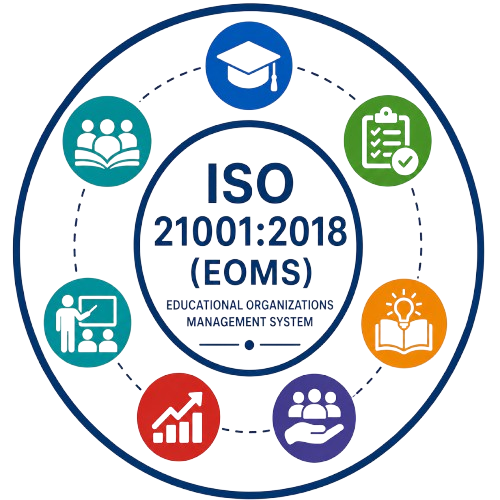
ISO 21001 is an international standard designed specifically for Educational Organizations Management Systems (EOMS). It provides a framework to help institutions align their objectives with globally accepted best practices, enhance the quality of educational services, and ensure a learner-centric, inclusive, and equitable environment.
Key Features and Objectives
-
- Learner-Centric Focus: The primary goal is to ensure that learners receive the expected quality of education, with a strong focus on accessibility, special needs support, and a safe learning environment.
- Process-Driven: It uses the Plan-Do-Check-Act (PDCA) cycle to create consistent teaching methods, transparent curriculum design, and measurable student evaluations.
- Stakeholder Engagement: Recognizes that education involves more than just students; it accounts for the requirements of educators, parents, employers, and society.
- Social Responsibility: Encourages institutions to be responsible, ethical, and equitable by providing accessible learning to all.
Who Should Implement It?
The standard is highly adaptable and applies to all types of organizations that utilize a curriculum to provide teaching, learning, or research. This includes:
-
- Preschools, primary, and secondary schools
- Universities, colleges, and higher education academies
- Vocational training centers and language schools
- Corporate training departments and non-profit educational organizations
Core Principles
The ISO 21001 EOMS is based on 11 fundamental management principles:
-
- Focus on learners and beneficiaries
- Visionary leadership
- Engagement of people (staff)
- Process approach
- Continuous improvement
- Evidence-based decisions
- Relationship management
- Social responsibility
- Accessibility and equity
- Ethical conduct in education
- Data security and protection.
Benefits of Certification
-
- Improved Reputation: Boosts institutional credibility and global recognition, helping attract students and fostering international collaborations.
- Operational Efficiency: Transitions educational delivery from informal practices to structured, documented processes that are data-based rather than opinion-based.
- Continual Evaluation: Regular internal audits and management reviews ensure the quality of teaching and resource allocation never remains static and constantly evolves to meet learner needs.
How to conduct a gap analysis for your current educational management?
Let me know how you’d like to proceed!

Related Courses
12. UC SCHOLARSHIP LIBRARY CENTER
12. UC E-SCHOLARSHIP LIBRARY CENTER 12. UC E-SCHOLARSHIP LIBRARY CENTER KLIK TEXT ATAU GAMBAR DIATAS UNTUK MASUK KE DIGITAL LIBRARY
11. TRUST LIBRARY CENTER
11. TRUST LIBRARY CENTER 11. TRUST LIBRARY CENTER KLIK TEXT ATAU GAMBAR DIATAS UNTUK MASUK KE DIGITAL LIBRARY
10. OVERDRIVE LIBRARY CENTER
10. OVERDRIVE LIBRARY CENTER 10. OVERDRIVE LIBRARY CENTER
09. OPEN LIBRARY CENTER
9. OPEN LIBRARY CENTER 9. OPEN LIBRARY CENTER KLIK TEXT ATAU GAMBAR DIATAS UNTUK MASUK KE DIGITAL LIBRARY

08. ISO 50001
ISO 50001 ISO 50001 is a globally recognized international standard that provides organizations with a structured framework to establish, implement, maintain, and improve an Energy Management System (EnMS) How It Works The standard is built on the universally recognized Plan-Do-Check-Act (PDCA) Plan: Do: Check: Act: Key Benefits…